The Cavern

Rock & Words

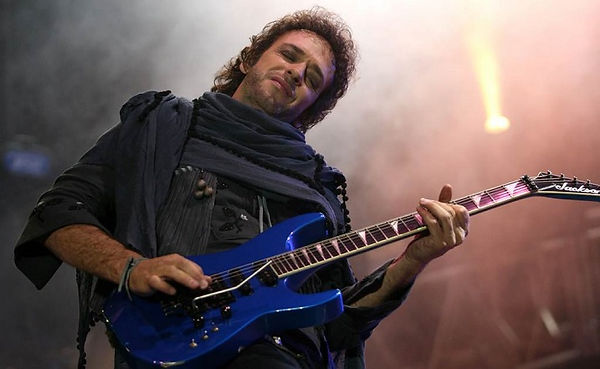
GUSTAVO CERATI
"Explosiones en tus ojos, agujeros en la piedra,
y un verde profundo en el mar.
Hay algo en el aire, detalle infinito,
y quiero que dure para siempre…
para siempre."
"C"
Main Decade: 90’s/00’s
Main Eras:
90s Rock en Ñ: The Golden Age.
2000s Rock en Ñ: The Dispersion.
Key Members:
Gustavo Cerati.
Key Songs:
Amor Amarillo, Vuelta por el Universo, Pulsar, Lisa, Bocanada, Rio Babel, Puente, Adiós, Crimen, Lago en el Cielo, Sudestada, Cosas Imposibles, Karaoke, Cactus, He Visto a Lucy, Fuerza Natural, Jugo de Luna, Me Quedo Aquí, La Excepción, Raíz, Beautiful, Verbo Carne, Avenida Alcorta, Bajan (Cover de Spinetta), Te Llevo para que me Lleves, Hoy Ya No Soy Yo, Tu Locura, Perdonar es Divino, Tu Cicatriz en Mi, Es Solo una Ilusión, Magia, Tabú, Otra Piel.
Among the great revolutions that humankind has faced, we generally focus more on the extreme ones, those that have impacted humanity by completely changing the present. These are the ones that are most noticeable on a massive scale, but there are also silent revolutions, those that, over time, we come to understand why what we have before us is so important, even if we've had it right in front of us for years. This type of revolution is generally associated with "cult" and less mainstream artists, although there are exceptions, such as those who explored both paths. Gustavo's case is that of someone who traversed both sides: first, the more extreme side with Soda Stereo, completely changing the Latin market and elevating its quality; and with his solo career, we initially have this silent revolution, the one that is much more appreciated over time.
Perhaps Cerati's solo career helps us observe the different forms of greatness an artist can possess, the true difference between being one of the giants of Latin American musical history, or simply an artist with a good number of albums. Clearly, Gustavo was ahead of his time in many aspects; given this, his place is in that pantheon of artistic greatness where, surely in Argentina, Spinetta, Piazzolla, Yupanqui, and Charly García reside. Cerati's case is then that of a once-in-a-decade talent, a unique, skillful, and crystalline diamond who, in Soda Stereo, was able to be a leader, but in some of his work, I believe he found himself limited by the tide of time and the market within his band (especially in Soda Stereo's early days). Thus, Gustavo's solo career is one of incredible experimentation, hinting at other paths he explored. It is here that the intimate and introspective artist is born; his lyrics become more personal, and his sound borders on massive experimentation in an early stage where he passionately engages with both electronic music and progressive rock.
Incredibly, in the early years of his career, Cerati preferred to contribute to other groups rather than launch a solo career. Initially, the idea didn't appeal to him; he was more excited about making music with others. For example, there was his participation in the first album by Fricción, Richard Coleman's New Wave group; his guitar contribution to the track "La Bestia Humana" on the debut album of the then-unknown Caifanes in Mexico; and later, Charly García's invitation to record a trio album with Pedro Aznar. Although rehearsals took place, everything was suspended due to Charly's hospitalizations and Gustavo's limited time. The project ultimately became Aznar and García's highly successful album, Tango 4, on which Cerati was unable to participate. In honor of Gustavo, they named it Tango 4, since it was originally going to be called Tango 3, and they left the "3" for later, although Cerati did have the privilege of participating in one of the tracks, "Vampiros."
By the 90s, everything was slowly starting to change. The experimental Cerati in his purest form was born with Colores Santos, the album created in collaboration with Daniel Melero, his friend who composed "Trátame Suavemente" from Soda Stereo's first album, and a key figure in the 80s underground scene. This almost music-obsessed, studio-driven union of talented songwriters (for those unfamiliar with Melero, I recommend his 90s album Travesti, or Silencio by Los Encargados, the band he led) gave us one of the most experimental albums in all of Latin Rock, an electronic and psychedelic combination that takes us in part to techno-pop and in other areas closer to dream pop, genres that were very new at the time. This album, while not a huge success, was, like Soda Stereo's Dynamo, one of the hidden gems in Cerati's discography, arguably the most advanced album of its time, and also marked the birth of a new Gustavo, much more experimental and daring. It goes without saying that with someone like Cerati, Argentine rock was able to break these experimental boundaries.
Later, during the period surrounding the release of Dynamo, Cerati moved to Chile with his newly formed family. This led to his first solo release, Amor Amarillo, on which he played virtually all the instruments himself. It was released at a high point in his personal life, not so much within the band, which was already nearly defunct, but rather with his newly formed family. It was here that he expressed his most personal lyrics, leaving behind the nightlife-oriented irreverence of his earlier work and adding a more heartfelt touch, expressing not only love for his family but also nostalgia for living far from his country and without his other family (Soda Stereo). In terms of sound, it departs significantly from both Colores Santos and Dynamo. While the electronic influence is noticeable, we can also hear some acoustic and electric nuances; thus, it is also, in a way, the album closest to the sound of Canción Animal, but with a different style. If I may make a comparison, the way it was recorded is very similar to Spinetta's Artaud, being an introspective and artistic message at the same time, albeit in a different context and with different ideologies. In any case, it was an album without demands from the public or the market, simply the challenge of starting a solo project, to observe the future landscape, a landscape he was already beginning to glimpse without Soda…
Without Soda Stereo, Cerati embarked on some electronic projects like Plan V and Ocio, which were an escape and a break before working hard on his second solo album. Bocanada would be one of the most demanding albums of his career, and some even considered it his first solo album, since it was the first he released without being in Soda. The result was the last great gem of the decade. Partly recorded at Abbey Road, Bocanada perhaps marks the beginning of a new era for Latin Rock, one that demanded a more complex evolution, far ahead of its time, allowing Cerati to explore more orchestrated, electronic, and atmospheric sounds. In short, the specific musical genre no longer mattered as much as the atmospheres created and the combination of sometimes disparate genres.
After Bocanada, and already enjoying significant renown for his solo work, he embarked on two unusual solo projects. The first was a soundtrack for the film +bien, in which he blended electronic and ambient music, and in which he also had the pleasure of acting in the film. His other project was called 11 Episodios Sinfónicos (11 Symphonic Episodes), in which he created orchestral versions of Soda Stereo songs and his own solo work. It's fascinating how, in such a short time, he experimented from one extreme to the other, from the most experimental house music to an album of orchestrated covers. Cerati's aim was clearly to be a well-rounded musician. These equally important events would also shape his future iconography, while he also produced work for other artists like Leo Garcia and Altocarnet. He was certainly never idle.
Beyond these brief respites, so to speak, Cerati would release the album that would definitively establish him as a pop icon in Argentina. Siempre es Hoy would become his solo album with the most hits to date, following a long period of experimentation. It was a less ambitious work than Bocanada, but with a similar style, featuring a more techno and danceable feel. It must be said that this album is a product of that era, when electronic dance music was beginning to gain popularity in Argentina. Thus, the hit "Cosas Imposibles" was constantly playing on the radio and in nightclubs.
There was a long wait until 2006 for a new album from Cerati. In the meantime, he released a single for a telenovela called "Tu Locura," while also forming another electronic music group called Roken. But he made us wait, and then released the album that brought him solo success throughout Latin America. Ahí Vamos is a much more rock-oriented and radio-friendly work than his previous albums; it's still a great album, full of hits with a classic feel, perhaps very close in that respect to Canción Animal, but more connected to the current indie sound. In any case, as seen on the cover, Cerati once again made the guitar his standard-bearer and main instrument, but he also gave us a piano-composed ballad like Crimen, which, with its video, marked his truly massive return to the top spot throughout Latin America. He even had the luxury of composing a song on the album with his son Benito, the now very well-known "Adiós."
Incredibly, between 2005 and 2008, he was also involved as a guest on several projects: He covered songs for the compilation album "Los Libros de la Buena Memoria" by Invisible, and even Spinetta himself called on him to participate in two tracks for his ambitious 5-hour live DVD. He participated in the track "El Mareo" by the electronic tango group Bajofondo, which became one of his best-known songs. He collaborated on some covers with Fabiana Cantilo, including a brilliant version of "Eiti Leda" by Serú Girán; he teamed up with Mercedes Sosa to record Soda Stereo's "Zona de Promesas"; he was invited to record a charity single with Roger Waters and Pedro Aznar, and he collaborated with artists as diverse as Shakira, D-Mente, and No lo soporto. By that time, Cerati was already one of the most monumental Latin musicians the world could present. He no longer had anything to prove to anyone.
After Soda Stereo's return in 2007 and extensive tours, he took a short break the following year before releasing "Fuerza Natural" in 2009, which, in my opinion, is his worst compared to his previous work. However, it goes without saying that the worst thing Cerati released in Argentina might be the best thing coming out here at the time. While the sound leans more towards electronic and dance-pop, the truly brilliant tracks are the acoustic ones, creating almost desert-like atmospheres. This fusion of wood and electricity gives them a distinct touch, one that, it seems to me, Cerati had never explored before in his career. I think perhaps he wanted to connect with the current Indie/Folk scene in Argentina, exemplified by artists like Gabo Ferro and Lisandro Aristimuño.
In any case, the subsequent tour was tragic. After the stroke he suffered in Venezuela and four years of hopeful waiting, death came knocking at Gustavo's door. With this, Latin Rock lost its brightest diamond, and, as with Spinetta, the feeling that what happened to Gustavo is unreal remains. Perhaps in Gustavo's case, his loss to Latin Rock will be felt more in the future—Spinetta already had a truly accomplished career with almost 50 albums—Gustavo still had so much to create, and that's what I regret most, because despite his advanced age, for the music world he was truly young and relevant. Another issue is the collective grief, the kind that affects two or three generations, and that many people in their 30s and 40s feel deeply. Thus, Gustavo remains a myth in that eternal place for future generations, who will be amazed by his compositions and will surely become a source of profound pleasure for them.
By Homer
Sep/15/2014